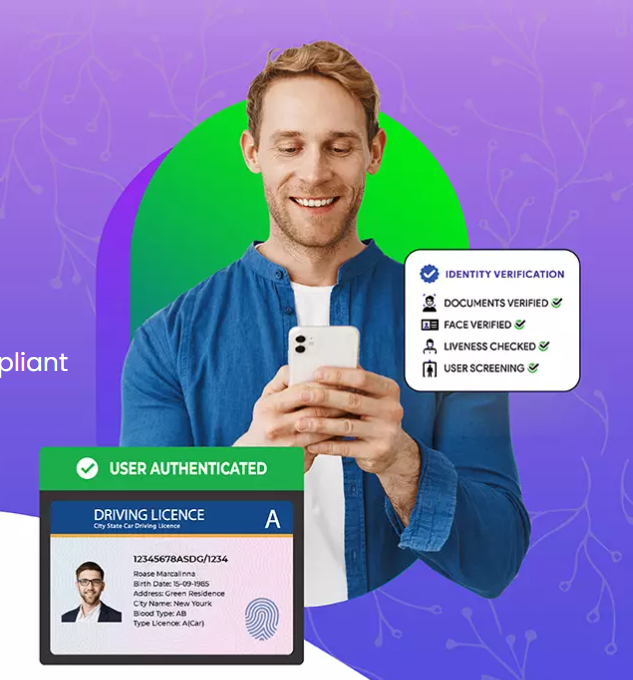
As digital services continue to expand, businesses need reliable ways to confirm that customers are who they claim to be. Traditional identity verification methods can be vulnerable to forged documents, stolen credentials, and fraudulent identities. Modern technologies such as NFC verification and face match verification are helping organizations create faster, safer, and more convenient digital identity verification processes.
By combining information stored on NFC-enabled identity documents with facial biometric comparison, businesses can establish stronger confidence in a person's identity while reducing friction during onboarding.
NFC verification uses Near Field Communication technology to securely read information stored inside an NFC-enabled identity document. Many modern passports, identity cards, and other official documents contain an embedded NFC chip that can store digitally signed information about the document holder.
During an NFC verification process, a compatible smartphone or NFC-enabled device communicates with the document's chip. The verification system can retrieve relevant data and use cryptographic checks to determine whether the information is authentic and has been altered.
Unlike simply photographing an identity document, NFC verification can provide access to digitally stored information that is much harder to manipulate through ordinary image editing. This makes NFC technology particularly useful for high-trust digital onboarding.
Face match verification is a biometric technology that compares a person's facial image with a trusted reference image. The reference may come from an identity document, an official database, or another previously verified source.
During the process, the user typically captures a selfie or facial image. Advanced facial recognition algorithms analyze distinctive facial characteristics and generate a similarity score between the live image and the reference image.
Face match verification can help organizations determine whether the individual presenting an identity document is the same person represented by that document. When combined with additional security measures such as liveness detection, it can provide stronger protection against presentation attacks and identity fraud.
Individually, NFC verification and face match verification provide valuable identity signals. Together, they can create a more comprehensive verification workflow.
For example, a digital onboarding process may follow these steps:
This layered approach can make it significantly more difficult for fraudsters to use stolen, altered, or counterfeit identity documents.
NFC verification provides access to digitally stored document information, while face matching helps connect that identity to the person undergoing verification. Together, they create multiple verification layers.
Businesses can strengthen defenses against identity theft, document manipulation, and impersonation by combining document-level and biometric verification.
Automated verification can reduce dependence on manual document reviews. Customers can complete identity checks remotely using compatible mobile devices.
A streamlined verification journey can reduce unnecessary paperwork and make onboarding more convenient for customers.
Industries that require customer identification and risk controls can use automated identity verification technologies to support their compliance processes, subject to applicable laws and regulatory requirements.
NFC verification and face match verification can support identity-focused workflows across many industries. Financial institutions can use them during remote customer onboarding and account opening. Fintech companies can integrate them into digital KYC processes, while insurance providers can use identity checks during policy onboarding and claims-related workflows.
Travel and hospitality platforms can also benefit from stronger remote identity verification. Recruitment and workforce platforms may use these technologies to help confirm candidate identities during digital onboarding. Telecommunications, marketplaces, and other online services can similarly use biometric and document verification to reduce impersonation risks.
Organizations evaluating an identity verification platform should consider factors such as document coverage, NFC compatibility, facial recognition accuracy, liveness capabilities, processing speed, API integration, security controls, privacy practices, and scalability.
A strong solution should also provide a smooth user experience without compromising verification quality. Organizations should evaluate how the technology handles different devices, lighting conditions, document types, and user environments.
NFC verification and face match verification represent two important components of modern digital identity security. NFC technology can help validate information stored within supported identity documents, while facial matching can help determine whether the person presenting the document corresponds to the verified identity.
When these technologies are integrated into a well-designed identity verification workflow, businesses can improve fraud prevention, streamline digital onboarding, and build greater trust in remote transactions. As more services move online, combining document-based verification with biometric identity checks can become an increasingly valuable strategy for secure and convenient digital experiences.

This post has been authored and published by one of our premium contributors, who are experts in their fields. They bring high-quality, well-researched content that adds significant value to our platform.








Daily Food brings you recipes, cooking tips, food ideas, and useful information for food lovers. Discover fresh ideas and make every meal more enjoyable.